











Blog
How to Choose a PCB Mount Fuse Holder: 6 Step Engineering Guide

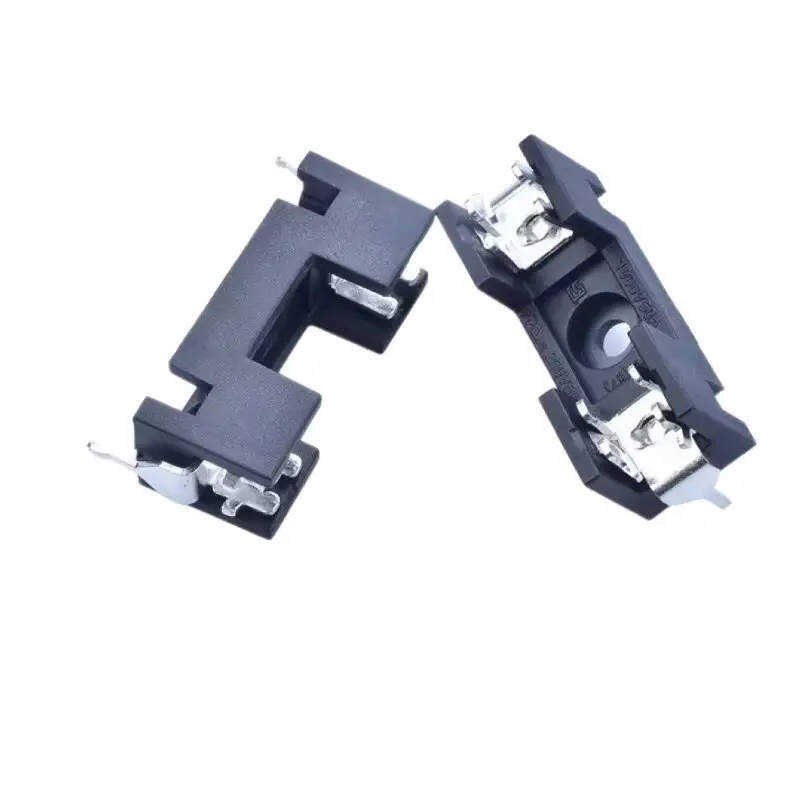
Selecting the wrong PCB mount fuse holder can cause overheating, poor contact, false tripping or even circuit failure. For engineers building automotive, industrial or power supply boards, matching the holder to your fuse, electrical requirements and assembly process is critical for long-term reliability.
This 6-step guide walks through the core selection criteria, based on standard UL94-V0 rated PCB fuse holders from GFEFUSE.
1: Match the Fuse Size and Fuse Type
The first and most important rule: the fuse holder must exactly match your fuse dimensions and format.
- For 5×20mm glass or ceramic tubular fuses, use a dedicated 5x20mm PCB mount fuse holder.
- For 6.35×31.75mm high-voltage tubular fuses, select a corresponding 6.35×31.75mm through-hole holder.
- For automotive blade fuses (ATO, ATC, mini, maxi), choose a horizontal PCB blade fuse holder designed for that specific blade profile.
Never force a mismatched fuse into a holder; loose fit leads to high resistance and overheating, while over-tight fit damages the contact spring.
2: Verify Current Rating and Apply Derating
PCB mount fuse holders have a maximum continuous current rating determined by contact material, cross-section area and heat dissipation.
- As a baseline, the holder’s continuous current rating must be at least 125% of the fuse’s rated current for normal ambient environments.
- For high-temperature environments (above 50°C) or enclosed boards, increase derating to 150% to compensate for reduced heat dissipation.
- GFEFUSE PCB mount holders range from 10A for signal-level circuits up to 50A for high-power DC boards.
3: Confirm Voltage Rating and Dielectric Strength
Voltage rating defines the maximum voltage the holder can safely withstand without arcing or breakdown.
- The holder’s voltage rating must be equal to or higher than the circuit’s maximum operating voltage.
- For low-voltage control circuits (12V–48V DC), standard 250V AC rated holders are sufficient.
- For high-voltage DC applications (PV inverters, energy storage), choose holders with ≥1000V DC rating and ≥3000V AC dielectric withstand strength.
4: Select Housing Material and Flame Rating
Housing material directly impacts temperature resistance, flame safety and soldering compatibility.
- PBT (Polybutylene Terephthalate) with UL94-V0 flame retardant rating: the standard choice for most through-hole PCB fuse holders, resistant to 260℃ wave/reflow soldering temperatures.
- Glass-filled PBT: for higher mechanical strength and elevated temperature environments.
- Avoid non-flame-retardant plastics for industrial and automotive designs; always verify UL94-V0 certification.
5: Check Contact Material and Contact Resistance
The internal contact clip is the most critical component for reliable performance.
- Brass (H65) or phosphor bronze with tin plating: the standard for good conductivity, elasticity and corrosion resistance.
- Look for maximum contact resistance of <5mΩ to <50mΩ depending on current rating. Lower resistance means less heat generation and higher efficiency.
- Spring tension must remain consistent after thousands of insertions; GFEFUSE holders maintain stable clamping force even under thermal cycling and vibration.
6: Match Your Soldering Assembly Process
PCB mount fuse holders are available in two mounting technologies:
- Through-hole (THT): most common for tubular and blade fuse holders, inserted into PCB holes and wave soldered. Suitable for high vibration environments and higher current ratings.
- Surface-mount (SMT): for compact, high-density boards, assembled via reflow soldering. Typically used for lower current signal and consumer electronics circuits.
Always confirm the holder is compatible with your soldering temperature profile; standard PBT housings support lead-free reflow up to 260℃ for 3 seconds.
Final Quick Selection Checklist
Before finalizing your BOM:
- Fuse size and type match the holder exactly
- Current rating with proper derating for your environment
- Voltage rating meets or exceeds circuit maximum voltage
- Housing is UL94-V0 flame retardant PBT or equivalent
- Contact material is brass/phosphor bronze with acceptable resistance
- Mounting style fits your assembly process
GFEFUSE offers a full range of PCB mount fuse holders for 5×20mm, 6.35×31.75mm tubular fuses and automotive blade fuses, all with UL94-V0 housings and RoHS compliance. Browse our PCB mount fuse holder catalog or download datasheets for detailed specifications.
For custom pin configurations or special material requirements, contact our engineering team for application support.