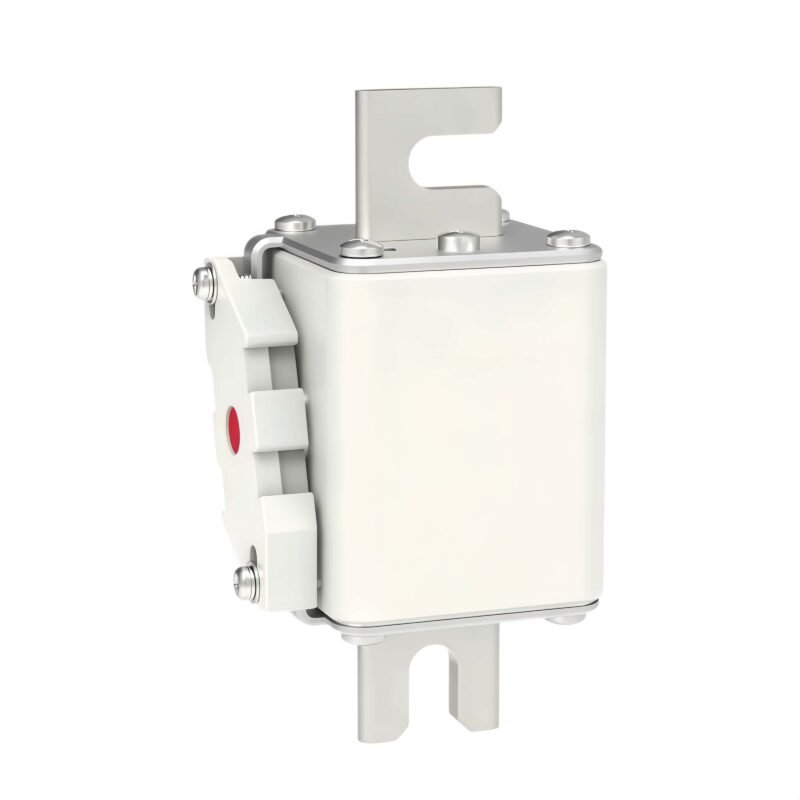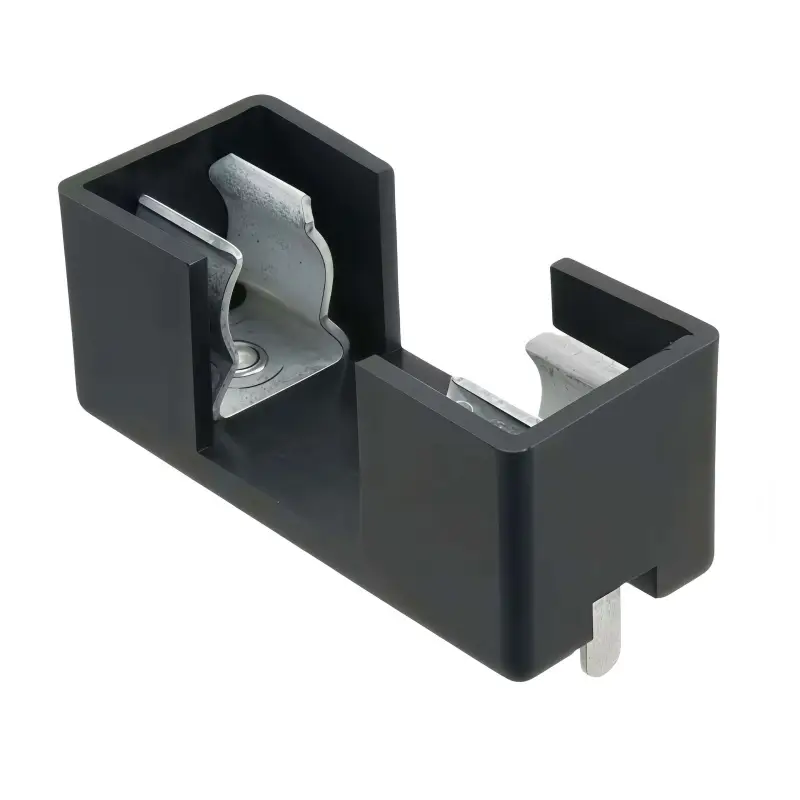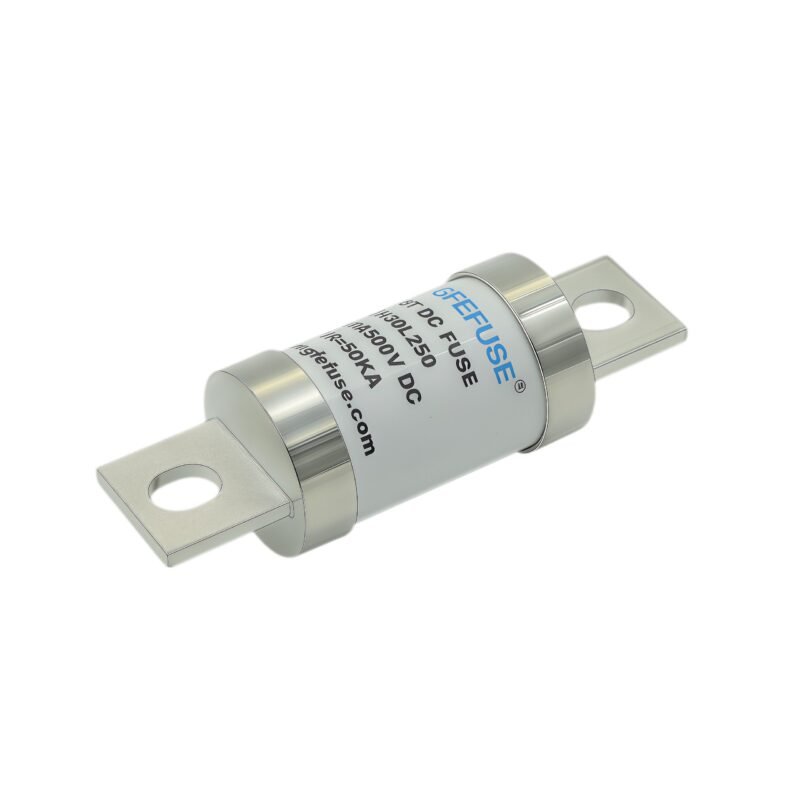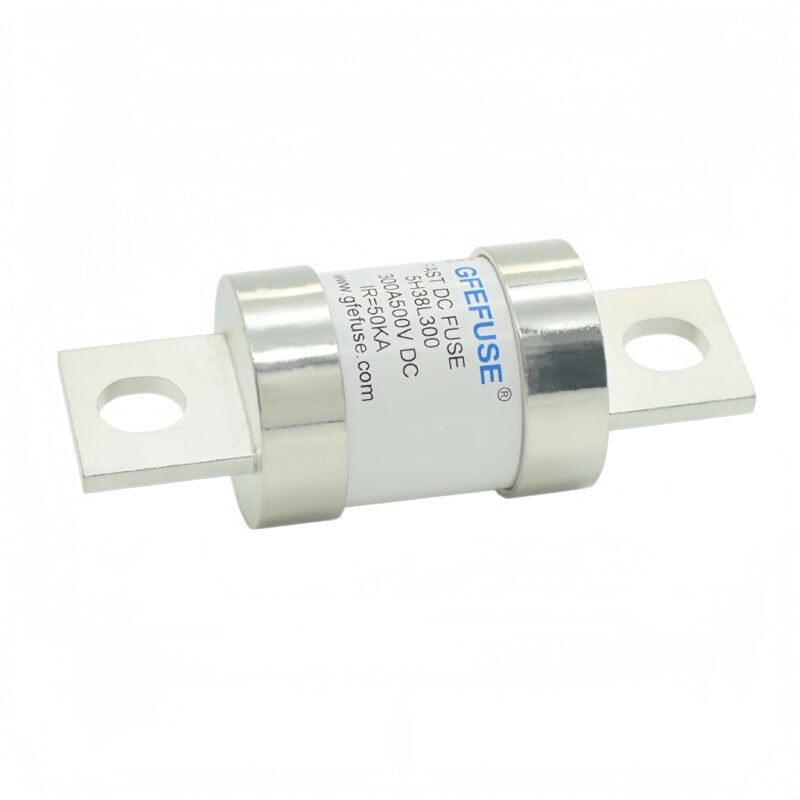












Fusible semi-conducteur de puissance CC série GFEVF150 | 70-1000 A 150 V CC Classe aR | EssFuse
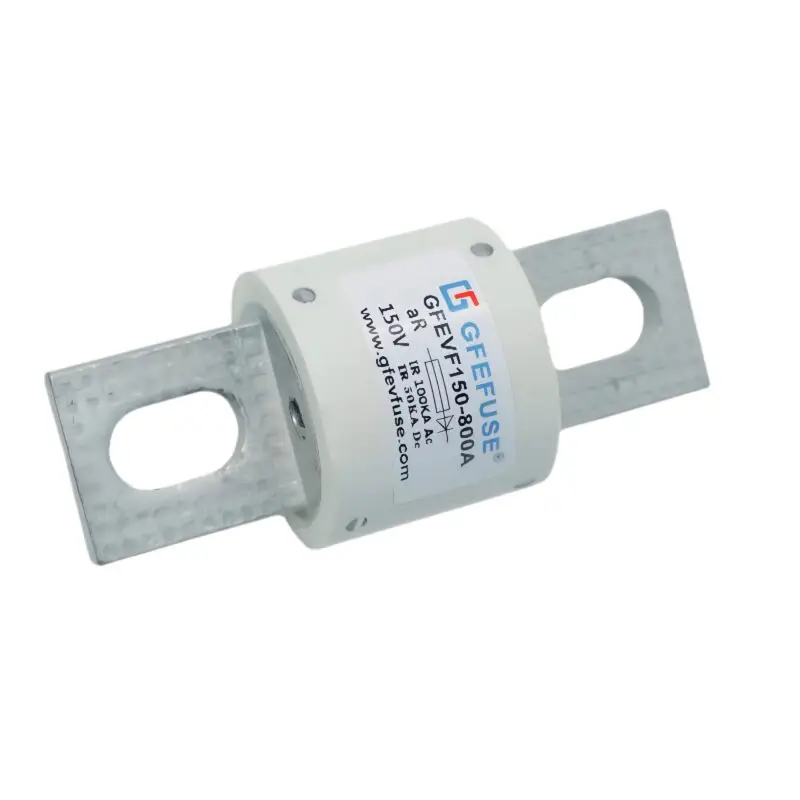
GFEVF150 North‑American‑style aR‑class DC power semiconductor fuse,70‑1000A 125/150V DC,50kA breaking capacity. Low I²t & watt‑loss for energy‑storage,battery‑pack,DC drives,converters. CE RoHS, UL248.13 & IEC60269.4 compliant.
Plus de 20 ans d'expérience
Plus de 20 ans d'expérience dans la fabrication de protections électriques et de fusibles.
Contrôle qualité rigoureux
Des tests rigoureux garantissent la fiabilité des performances du produit.
Obtenir un devis
GFEVF150 Series DC Power Semiconductor Fuse
Présentation du produit
GFEVF150 Series is North‑American‑style aR‑class DC power semiconductor fuse produced by GFEVFUSE. First of all, this high‑speed fuse targets heavy‑duty DC industrial circuits to safeguard sensitive semiconductor devices. Therefore, it delivers excellent DC interruption performance with low arc voltage and low I²t energy let‑through. Furthermore, it covers 70‑1000A current range under 125V /150V DC, with 50kA high breaking capacity. In addition, it meets UL248.13, IEC60269.4, CE and RoHS standards. As a result, it becomes the preferred over‑current and short‑circuit protective component for new‑energy DC equipment.
General Specifications
| Article | Paramètre |
|---|---|
| Série | GFEVF150 (North‑American‑Style DC Power Semiconductor Fuse) |
| Tension nominale | 125V,150V DC |
| Courant nominal | 70A‑1000A |
| Capacité de rupture nominale | 50kA @150V DC(max) |
| Constante de temps | 2,5 ± 0,5 ms |
| Classe de protection | aR(Semiconductor protection) |
| Standard Reference | UL248.13, IEC60269.4 |
| Certification | Conforme aux normes CE et RoHS |
Electrical Parameters(I²t & Watts Loss @150V DC)
| Modèle | Courant nominal (A) | Pré-arc I²t(A²s) | Nettoyage I²t(A²s) | Perte en watts (W) |
|---|---|---|---|---|
| GFEVF150‑070 | 70 | 470 | 4000 | 6.9 |
| GFEVF150‑080 | 80 | 670 | 6000 | 7.7 |
| GFEVF150‑100 | 100 | 1200 | 12000 | 9.0 |
| GFEVF150‑125 | 125 | 1870 | 18000 | 11.2 |
| GFEVF150‑150 | 150 | 2700 | 26000 | 13.5 |
| GFEVF150‑200 | 200 | 4780 | 45000 | 17.6 |
| GFEVF150‑250 | 250 | 7470 | 70000 | 22.5 |
| GFEVF150‑300 | 300 | 10760 | 100000 | 27.0 |
| GFEVF150‑350 | 350 | 15700 | 140000 | 30.6 |
| GFEVF150‑400 | 400 | 20300 | 180000 | 35.2 |
| GFEVF150‑500 | 500 | 39000 | 120000 | 35.0 |
| GFEVF150‑600 | 600 | 46000 | 140000 | 47.0 |
| GFEVF150‑700 | 700 | 75000 | 220000 | 49.0 |
| GFEVF150‑800 | 800 | 92000 | 280000 | 58.0 |
| GFEVF150‑1000 | 1000 | 170000 | 510000 | 60.0 |
Dimensions du contour (mm)
| Gamme actuelle | A±1,5 | B±1 | C±1 | D±1,5 | E±0,5 | F±0,5 | H±1 | G±0,5 |
|---|---|---|---|---|---|---|---|---|
| 70‑400A | 68 | 25 | 29 | 52 | 9 | 17 | 4 | 11 |
| 500‑1000A | 90 | 38 | 33 | 61 | 11 | 25 | 6 | 18 |
Conditions d'exploitation et de stockage
| Article | Paramètre |
|---|---|
| Température de stockage | ‑40℃ ~ +120℃ |
| Température ambiante de fonctionnement normale | ‑5℃ ~ +40℃ |
| Allowable Operating Temp | ‑40℃ ~ +85℃ |
| Courant continu recommandé | ≤75% de courant nominal du fusible |
| Altitude d'utilisation normale | ≤ 2000 m |
| Performances anti-vibratoires | Accélération ≥ 20 g |
Note: Please apply temperature, altitude derating factor when working beyond normal condition. Refer to official datasheet for exact coefficient values.
Caractéristiques et avantages principaux
- DC‑oriented design: Excellent DC interruption capability, low arc‑voltage and low I²t energy let‑through. Thus it offers gentle stress to protected semiconductor components.
- Fast fault‑clearing response: Up to ten‑times faster opening speed under heavy fault‑current, so it can effectively protect IGBT, thyristor and other sensitive semiconductor modules.
- Low watt loss & good cycling performance: Low power consumption reduces cabinet heating. In addition, it delivers stable performance for repeated working cycles.
- Parallel‑installation available: Multiple fuses can work in parallel within specification guidelines to achieve higher total ampacity.
- Strong environmental adaptability: Great anti‑surge capacity, wide temperature tolerance, outstanding vibration and shock‑resistance for industrial sites.
- Bolt‑on North‑American form‑factor: Convenient bus‑bar mounting. It meets CE and RoHS requirements for global export projects.
Applications typiques
- Energy‑storage system DC‑side over‑current & short‑circuit protection
- protection des variateurs de vitesse CC et des équipements à vitesse variable
- Protection du circuit côté CC des convertisseurs de puissance et des redresseurs
- Stationary and new‑energy vehicle battery‑pack main‑circuit protection
- Backup short‑circuit protection for DC relays and semiconductor power modules
Ressources à télécharger
FAQ
1: What does aR‑class mean for GFEVF150 fuse?
A: aR stands for semiconductor‑protection fuse class. In fact, it provides ultra‑fast short‑circuit cut‑off, which can limit fault energy and prevent permanent damage to sensitive power semiconductors such as IGBT and thyristor.
2: Can GFEVF150 series be used for AC‑circuit protection?
A: This series is optimized for DC‑system scenarios. For this reason, do not apply it to AC circuits unless you complete full‑performance verification together with manufacturer technical support.
3: Why limit continuous operating current ≤75% of rated value?
A: This setting reserves thermal safety margin for ambient‑temperature rise, altitude derating and transient load fluctuation. It can extend fuse service‑life and avoid unexpected non‑intentional blowing.
4: What derating rules apply when installing above 2000 m altitude?
A: For closed cabinet installation, derate rated‑current 2%‑5% per every 1000‑meter elevation increase. Meanwhile check air‑insulation clearance reduction. In open‑air environment, users can generally skip derating operations.
5: Is parallel connection allowed to obtain higher‑current capacity?
A: Yes, parallel mounting is permitted under official specification guidelines. But users must guarantee well‑balanced current‑sharing for each fuse unit in system design.
6: Does high ambient temperature affect fuse rated‑current?
A: Yes. If ambient temperature exceeds +40℃, you need to adopt temperature‑derating factor Kt to reduce practical working‑current. Please check the derating curve in datasheet for exact values.
7: Am I allowed to replace fuse under live‑load condition?
A: Normally you cannot replace fuse with load connected. Unless your device belongs to special load‑break fuse‑switch, please cut off power supply before any fuse‑replacement work.