









Guide alla selezione dei fusibili

How to Choose DC Fuses for EV Battery Packs | EssFuse

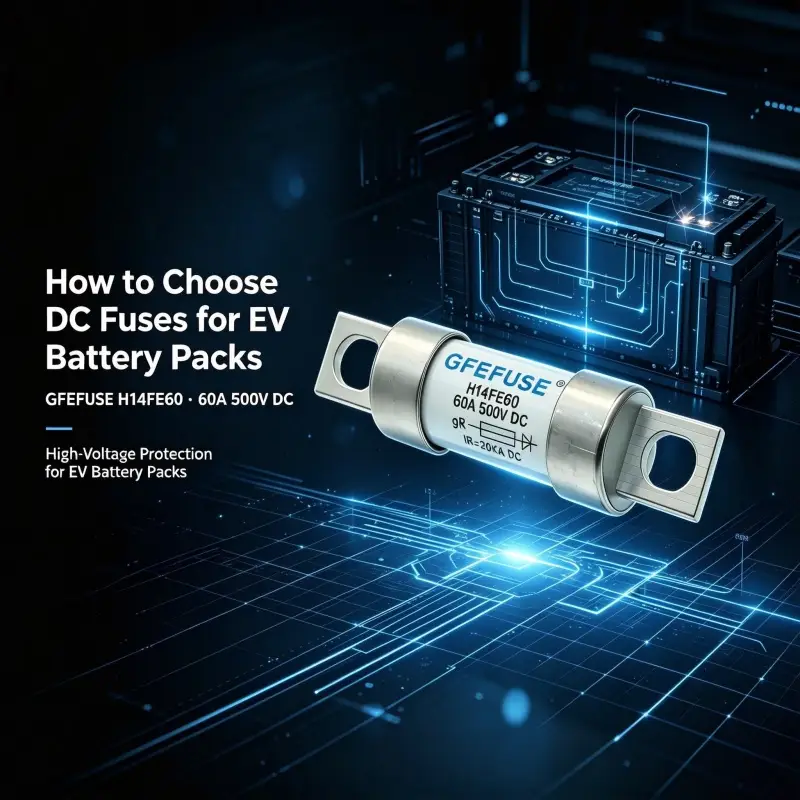
GFEFUSE H14FE60 60A 500V DC high voltage fuse, How to Choose DC Fuses for EV Battery Packs

How to Choose DC Fuses for EV Battery Packs
Proper EV battery pack DC fuse selection is critical to protect battery modules, power electronics and the entire high-voltage system against short circuits and overload faults. Improper fuse selection may trigger battery thermal runaway, burn out components, or cause unwanted fuse tripping during normal vehicle operation. This guide explains the core parameters and selection principles for EV DC fuses.


When selecting DC fuses for EV battery packs, review these core specifications one by one: rated voltage, rated current, breaking capacity, pre-arcing time, temperature derating and installation environment.

PARAMETERREQUIREMENT FOR EV BATTERY PACKNOTES
Tensione CC nominale≥ Maximum working voltage of the battery packFuse rated voltage must cover the full pack voltage. AC fuses cannot be used in DC circuits.
Valutato attualeDerated based on continuous operating currentApply a 0.7~0.8 derating factor for long-term high-temperature conditions inside the battery compartment.
Capacità di rotturaHigher than maximum prospective short-circuit currentEssential for safely interrupting short-circuit faults and preventing fuse rupture under fault conditions.
Intervallo di temperatura di funzionamento-40℃ ~ +125℃EV battery cabins experience wide temperature fluctuations.
Application TypeHigh-speed / semiconductor protection fuseDesigned for lithium-ion battery short-circuit protection.


Tensione CC nominale


The fuse’s DC rated voltage must be greater than or equal to the maximum voltage of your battery pack. If the voltage rating is insufficient, the electric arc cannot be extinguished after fusing, leading to sustained arcing and potential fire hazards.
Important Rule: DC fuses are not equivalent to AC fuses. AC fuses must never be used in high-voltage DC battery circuits of electric vehicles.
Rated Current & Temperature Derating


The nominal rated current marked on a fuse is tested under a standard 25°C environment. Since the temperature inside an EV battery pack is usually much higher, temperature derating calculation is mandatory. The typical derating factor ranges from 0.7 to 0.8.


Example: Continuous working current =140A, derating factor=0.75 → Fuse rated current ≥187A. For this case, our EssFuse 200A DC fuse is a suitable option.
Capacità di rottura

Breaking capacity refers to the maximum short-circuit current that a fuse can safely interrupt. In EV battery packs, short-circuit current can surge to thousands of amps in milliseconds.

Therefore, the fuse breaking capacity must exceed the prospective short-circuit current of the battery pack.


Main Types of EV DC Fuses for Battery Packs

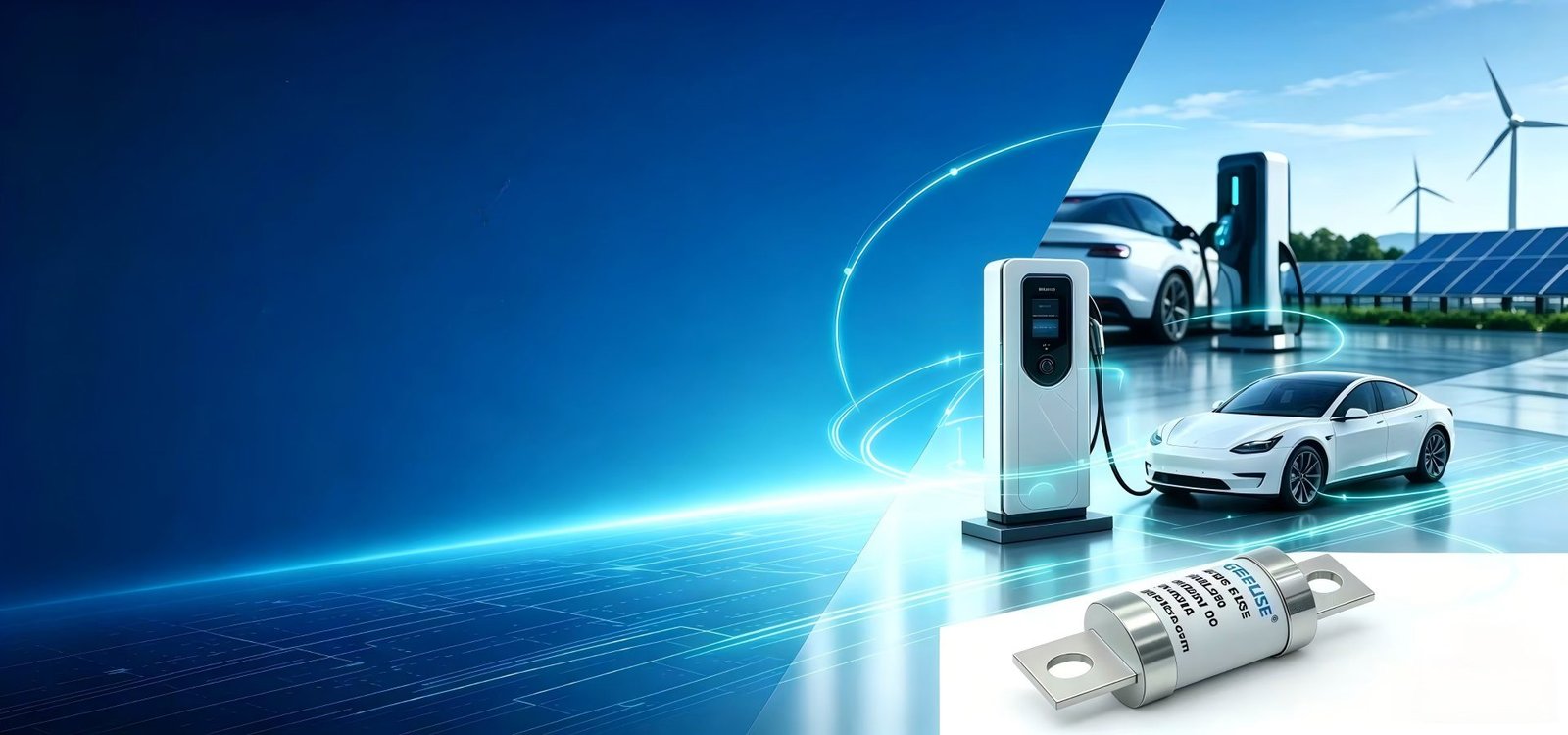
EssFuse High Voltage DC Fuse Series For main battery pack circuit protection. Features high breaking capacity and compact footprint, widely adopted in passenger EV and commercial vehicle battery packs.


Auxiliary Circuit DC Fuse For BMS, pre-charge circuits and low-voltage auxiliary loops, available in smaller current ratings.


EssFuse Style Automotive Fuse Ideal for low-to-medium DC current applications in auxiliary power distribution systems.


EssFuse supplies a full portfolio of EV DC fuses for battery pack applications. Download our complete product datasheet PDF for detailed specifications and dimension drawings.


Common Mistakes in EV Battery Fuse Selection
Selecting fuses purely by nominal current without verifying voltage matching
Ignoring temperature derating, leading to premature blowing under continuous load
Using AC fuses instead of DC fuses for battery circuits
Underestimating short-circuit current and selecting fuses with insufficient breaking capacity


FAQ
1: Can I reuse blown EV battery DC fuses?
A: No. Once the fuse element melts during a fault, its internal structure is permanently damaged. Even if it appears intact externally, it cannot guarantee reliable protection and must be replaced.
2: What is the difference between an EV DC fuse and a solar energy storage DC fuse?
A: Both work for DC circuits. EV battery fuses require ultra-fast response to stop battery short circuits and prevent thermal runaway. Energy storage fuses prioritize long service life under repeated charge-discharge cycles.
3: Where should the main DC fuse be installed inside the battery pack?
A: It is typically mounted near the battery pack positive terminal, as close as possible to the battery modules to rapidly limit fault energy.


Conclusion Selecting DC fuses for EV battery packs is far more than matching a current rating. You need to consider pack voltage, short-circuit current, operating temperature and real-world vehicle operating conditions. If you require custom fuse solutions for your EV project, explore our EssFuse EV DC fuse portfolio or reach out to the EssFuse engineering team for technical consultation and sample testing.