












Blog
How to Choose DC Fuses for EV Battery Packs | EssFuse

How to Choose DC Fuses for EV Battery Packs
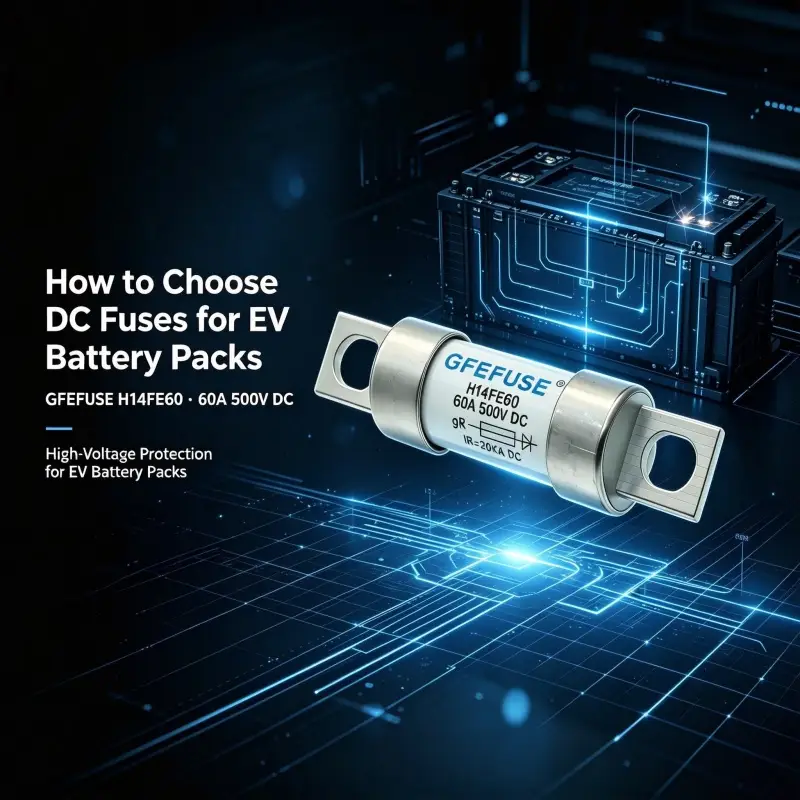
Proper EV battery pack DC fuse selection is critical to protect battery modules, power electronics and the entire high-voltage system against short circuits and overload faults. Improper fuse selection may trigger battery thermal runaway, burn out components, or cause unwanted fuse tripping during normal vehicle operation. This guide explains the core parameters and selection principles for EV DC fuses.
When selecting DC fuses for EV battery packs, review these core specifications one by one: rated voltage, rated current, breaking capacity, pre-arcing time, temperature derating and installation environment.
| PARAMETER | REQUIREMENT FOR EV BATTERY PACK | NOTES |
|---|---|---|
| Tensión nominal de CC | ≥ Maximum working voltage of the battery pack | Fuse rated voltage must cover the full pack voltage. AC fuses cannot be used in DC circuits. |
| Corriente nominal | Derated based on continuous operating current | Apply a 0.7~0.8 derating factor for long-term high-temperature conditions inside the battery compartment. |
| Capacidad de rotura | Higher than maximum prospective short-circuit current | Essential for safely interrupting short-circuit faults and preventing fuse rupture under fault conditions. |
| Operating Temperature Range | -40℃ ~ +125℃ | EV battery cabins experience wide temperature fluctuations. |
| Application Type | High-speed / semiconductor protection fuse | Designed for lithium-ion battery short-circuit protection. |